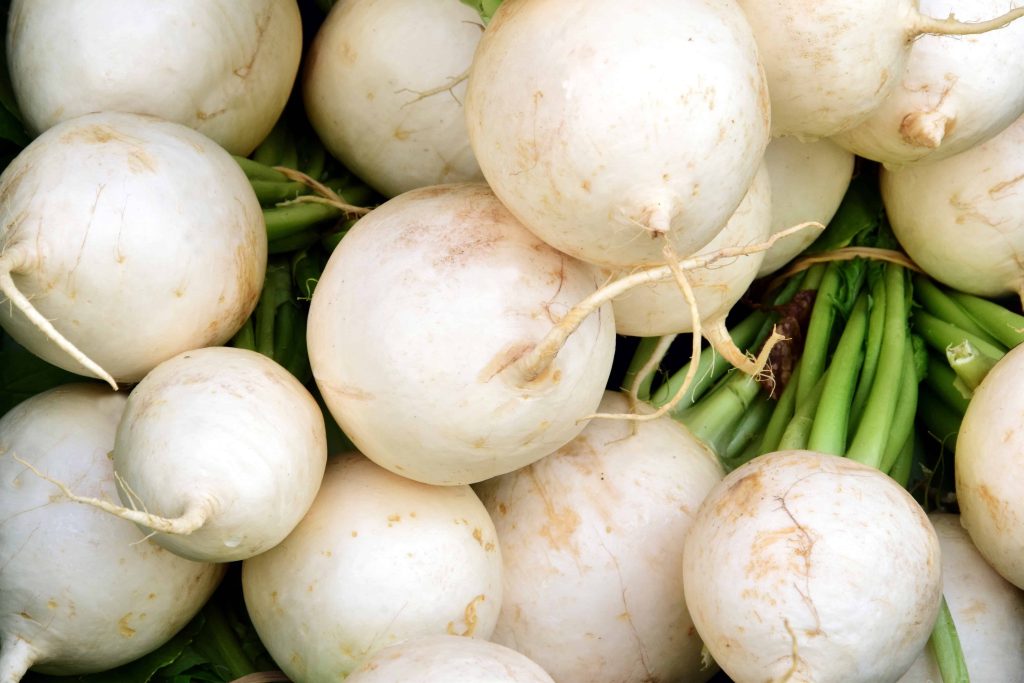
The turnip is a vegetable of the species Brassica rapa, primarily cultivated for its edible root and its leaves. It is used in various dishes and has good nutritional value.
Difficulty
Simple
Sun Exposure
Yes
Water
Regularly
Plant Size
30 CM
Nutrition
The turnip is rich in vitamin C, fiber, and antioxidants. It also contains potassium, calcium, and small amounts of B-complex vitamins.
Humidity
The turnip requires moderate and constant soil moisture, avoiding both dryness and excess water.
Cleaning
Cleaning consists of removing weeds and taking out damaged leaves.
Temperature
-100-50050100
Inaceitavel
Acceptable
Ideal
Sowing
Turnip planting is done by direct seeding into the soil. The seeds are placed in rows and, after germination, thinning can be done to allow for better root development.
Weaknesses
Susceptible to aphids and caterpillars
Vulnerable to fungal diseases
Excessive moisture can cause rot
Very compacted soils can deform the root
Very high temperatures can affect growth
Leaves/Fruits
The leaves are green, broad, and slightly rough.
The main part consumed is the rounded root that develops underground.