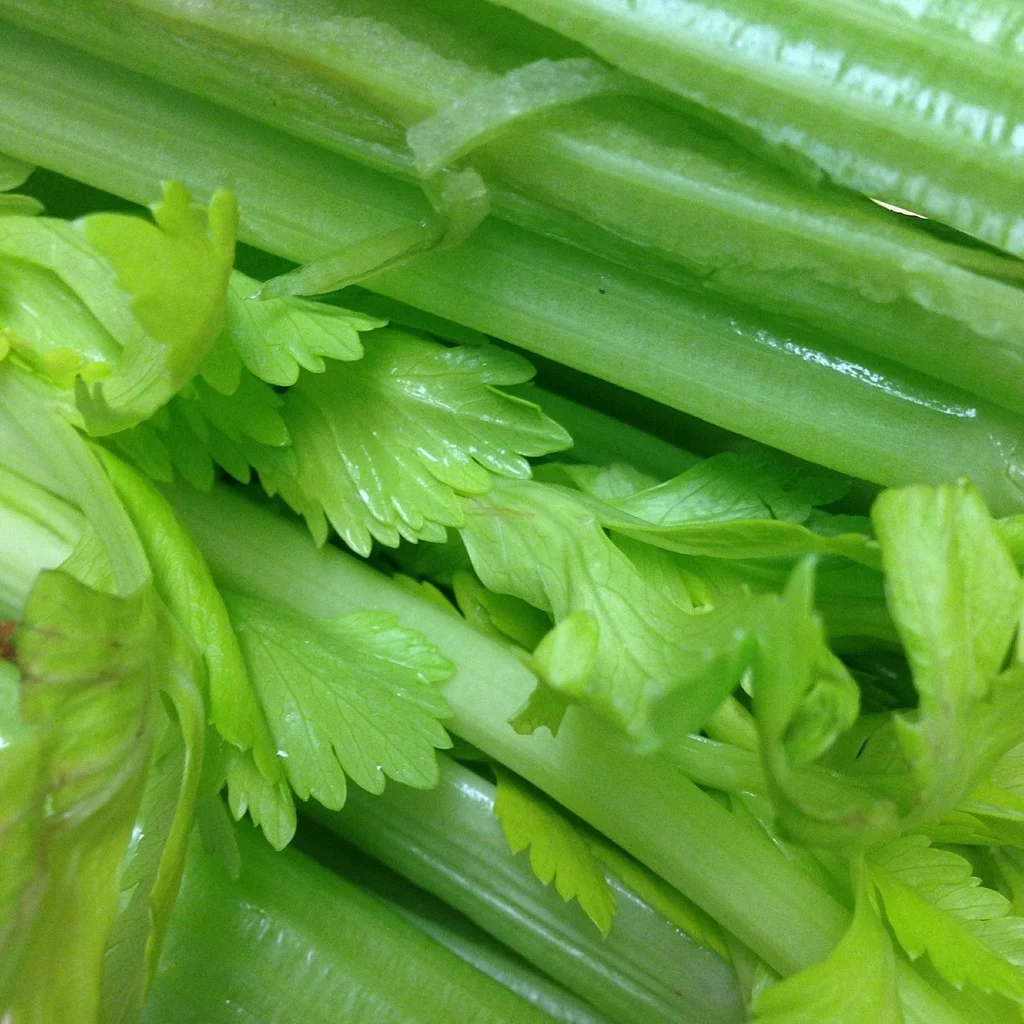
Celery is a vegetable of the species Apium graveolens, cultivated for its crunchy and aromatic stalks. It is widely used in cooking and has good nutritional value. It grows best in mild climates and in fertile, well-drained soils.
Difficulty
Hard
Sun Exposure
Yes
Water
Regularly
Plant Size
60 CM
Nutrition
Celery is rich in fiber, vitamin K, vitamin C, and vitamin A. It also contains potassium, folate, and antioxidants.
Humidity
Celery requires constant soil moisture, as dry soils can hinder stalk growth.
Cleaning
Cleaning consists of removing weeds and taking out old or damaged leaves.
Temperature
-100-50050100
Inaceitavel
Acceptable
Ideal
Sowing
Celery planting usually starts with sowing in a nursery. After initial growth, the seedlings are transplanted to their permanent location, leaving enough space between plants for the stalks to develop.
Weaknesses
Susceptible to aphids and other pests
Vulnerable to fungal diseases
Lack of water can affect development
Excessive moisture can lead to diseases
Sensitive to nutrient-poor soils
Leaves/Fruits
Celery leaves are green, aromatic, and divided into several segments.
The most consumed parts of the plant are the elongated, crunchy stalks.